
I love this salmon recipe because it’s simple and full of flavor, making it perfect for any night of the week. It’s one of those dishes that feels fancy but doesn’t take much time or effort. I can’t wait for you to try it and see how easy it is to make a tasty meal with just a few ingredients.
Most of the ingredients in this recipe are common and easy to find at any grocery store. If you don’t usually keep garlic powder on hand, it’s a great spice to add to your kitchen because it adds a nice flavor without needing fresh garlic. Freshly squeezed lemon juice is best for this recipe, so if you don’t have lemons, you might want to pick some up at the store for that bright, fresh taste.
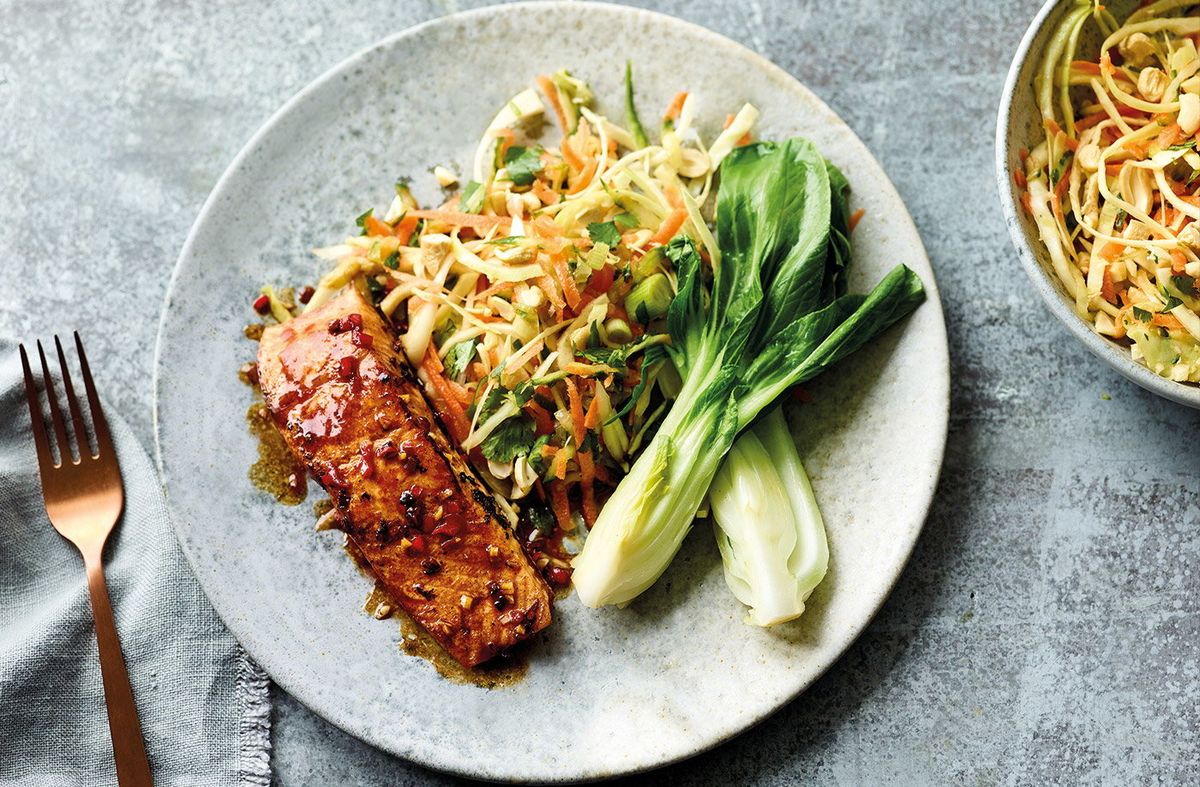
Ingredients for Salmon Recipe
Salmon fillets: The main part of the dish, salmon is a healthy fish rich in omega-3s and has a mild flavor that works well with simple seasonings.
Olive oil: Adds moisture and helps the seasonings stick to the salmon while baking.
Salt: Enhances the natural flavors of the salmon.
Black pepper: Adds a little bit of heat and depth to the taste.
Garlic powder: Gives a subtle garlic flavor without the need to chop fresh garlic.
Lemon juice: Adds a fresh, tangy finish that brightens up the whole dish.
Technique Tip for This Recipe
One of the most helpful steps in this salmon recipe is how you season and oil the fillets before baking. Here’s a simple way to do it so your salmon turns out juicy and flavorful every time:
- Place your salmon fillets on the lined baking sheet.
- Drizzle the olive oil evenly over each piece. You can use a spoon or just pour a little from the bottle, but try to cover the top so the fish doesn’t dry out.
- Sprinkle the salt, black pepper, and garlic powder over the oiled fillets. Don’t be shy—seasoning is what brings out the best taste.
- Use your fingers or a spoon to gently rub the oil and spices into the surface of the salmon. This helps the flavors stick and makes the outside a little crispy when baked.
Doing this step carefully makes cooking smoother because the oil keeps the salmon moist while it bakes, and the seasoning adds layers of flavor that make each bite delicious. If you skip the oil, the fish can dry out or stick to the foil, which isn’t fun to clean up or eat.
A little tip from me: the first time I made this, I didn’t rub the spices in and just sprinkled them on top. The flavors didn’t spread evenly, and some bites were bland. Now, I always take a moment to gently press the seasoning in—it’s worth the extra second! Also, using fresh lemon juice at the end brightens everything up, so don’t forget that last drizzle before serving. It’s like a little burst of sunshine on your plate.
Suggested Side Dishes
Alternative Ingredients
salmon - Substitute with trout: Trout has a similar texture and flavor profile to salmon, making it a great alternative.
salmon - Substitute with arctic char: Arctic char is closely related to salmon and has a comparable taste and texture.
olive oil - Substitute with avocado oil: Avocado oil has a high smoke point and a mild flavor, making it a suitable replacement for olive oil.
olive oil - Substitute with grapeseed oil: Grapeseed oil is neutral in flavor and also has a high smoke point, which works well for cooking.
salt - Substitute with soy sauce: Soy sauce can add a salty and umami flavor, but use it sparingly to avoid overpowering the dish.
salt - Substitute with sea salt: Sea salt can be used as a direct replacement for regular salt, offering a slightly different mineral taste.
black pepper - Substitute with white pepper: White pepper has a similar heat but a slightly different flavor, which can be a good alternative.
black pepper - Substitute with cayenne pepper: Cayenne pepper adds heat and a different spice profile, so use it in smaller quantities.
garlic powder - Substitute with fresh garlic: Fresh garlic provides a more intense and aromatic flavor compared to garlic powder.
garlic powder - Substitute with onion powder: Onion powder can add a similar depth of flavor, though it will be slightly different.
lemon juice - Substitute with lime juice: Lime juice offers a similar acidity and citrus flavor, making it a good alternative.
lemon juice - Substitute with white wine vinegar: White wine vinegar provides acidity and a slight tang, similar to lemon juice.
Other Alternative Recipes Similar to This
How to Store / Freeze This Dish
- Allow the salmon to cool completely before storing. This helps prevent condensation, which can make the fish soggy.
- Place the cooled salmon fillets in an airtight container. If you have multiple fillets, separate them with parchment paper to avoid sticking.
- Store the container in the refrigerator if you plan to consume the salmon within 3 days. For longer storage, proceed to freezing.
- To freeze, wrap each salmon fillet tightly in plastic wrap or aluminum foil. This helps to prevent freezer burn.
- Place the wrapped fillets in a freezer-safe zip-top bag. Squeeze out as much air as possible before sealing the bag.
- Label the bag with the date and contents to keep track of freshness.
- Store the salmon in the freezer for up to 3 months for optimal flavor and texture.
- When ready to use, thaw the salmon in the refrigerator overnight. Avoid thawing at room temperature to prevent bacterial growth.
- Reheat the salmon gently in the oven at 275°F (135°C) for about 15 minutes or until warmed through. Alternatively, you can reheat it in a skillet over low heat.
How to Reheat Leftovers
Oven Method:
- Preheat your oven to 275°F (135°C).
- Place the leftover salmon on a baking sheet lined with parchment paper or aluminum foil.
- Drizzle a bit of olive oil or a splash of lemon juice over the salmon to keep it moist.
- Cover the salmon loosely with foil to prevent it from drying out.
- Heat in the oven for about 10-15 minutes, or until the salmon is warmed through.
Stovetop Method:
- Heat a non-stick skillet over medium-low heat.
- Add a small amount of olive oil or butter to the skillet.
- Place the leftover salmon in the skillet.
- Cover the skillet with a lid to retain moisture.
- Heat for about 5-7 minutes, flipping once halfway through, until the salmon is warmed through.
Microwave Method:
- Place the leftover salmon on a microwave-safe plate.
- Cover the salmon with a microwave-safe lid or a damp paper towel to prevent it from drying out.
- Microwave on medium power for 1-2 minutes.
- Check the salmon and continue to heat in 30-second intervals until warmed through.
Steaming Method:
- Fill a pot with a small amount of water and bring it to a simmer.
- Place the leftover salmon in a steamer basket over the simmering water.
- Cover the pot with a lid.
- Steam for about 5-7 minutes, or until the salmon is heated through.
Air Fryer Method:
- Preheat your air fryer to 350°F (175°C).
- Place the leftover salmon in the air fryer basket.
- Heat for about 3-5 minutes, checking frequently to avoid overcooking.
- Remove once the salmon is warmed through and has a slightly crispy exterior.
Best Tools for This Recipe
Oven: Used to bake the salmon fillets at a consistent temperature of 400°F (200°C).
Baking sheet: Provides a flat surface to place the salmon fillets on for baking.
Aluminum foil: Lines the baking sheet to prevent sticking and make cleanup easier.
Measuring spoons: Used to measure out the olive oil, salt, black pepper, garlic powder, and lemon juice accurately.
Basting brush: Helps to evenly drizzle olive oil over the salmon fillets.
Tongs: Useful for handling the salmon fillets without breaking them apart.
Oven mitts: Protect your hands when placing the baking sheet in and taking it out of the oven.
Lemon squeezer: Extracts fresh lemon juice to drizzle over the cooked salmon.
Serving platter: A dish to present the cooked salmon fillets attractively.
How to Save Time on This Recipe
Prepare ingredients in advance: Measure and mix the seasonings ahead of time to streamline the cooking process.
Use pre-cut salmon: Purchase salmon fillets that are already portioned to save prep time.
Line the baking sheet: Use aluminum foil to minimize cleanup.
Preheat the oven early: Start preheating the oven while you prepare the salmon to save time.
Batch cooking: Cook extra fillets and store them for future meals.
Salmon Recipe
Ingredients
Main Ingredients
- 4 fillets Salmon about 6 oz each
- 2 tablespoon Olive Oil
- 1 teaspoon Salt
- 1 teaspoon Black Pepper
- 1 teaspoon Garlic Powder
- 1 tablespoon Lemon Juice freshly squeezed
Instructions
- Preheat your oven to 400°F (200°C).
- Line a baking sheet with aluminum foil.
- Place the salmon fillets on the baking sheet.
- Drizzle olive oil over the salmon fillets.
- Season with salt, black pepper, and garlic powder.
- Bake in the preheated oven for 15-20 minutes, or until the salmon is cooked through.
- Remove from the oven and drizzle with lemon juice before serving.
Nutritional Value
Keywords
Suggested Appetizers and Desserts
More Amazing Recipes to Try 🙂
- POG Juice Recipe5 Minutes
- Singapore Sling Cocktail Recipe5 Minutes
- Spicy Seafood Sauce Recipe30 Minutes
- Veggie Spring Rolls with Mango Dipping Sauce Recipe30 Minutes
- Pickled Watermelon Rinds Recipe30 Minutes
- Cocktail Sauce Recipe5 Minutes
- Mexican Sopes Recipe40 Minutes
- Traditional Mexican Street Tacos Recipe30 Minutes





Leave a Reply