

I’m really happy you’re here because this white cake recipe is one of my favorites to make for special occasions. It’s simple, soft, and has just the right amount of sweetness that makes everyone smile. I can’t wait for you to try it and see how easy it is to bake a classic cake from scratch.
Most of the ingredients in this recipe are common pantry staples like flour, sugar, and milk. The only thing you might want to check for at the supermarket is the egg whites, especially if you usually buy whole eggs. Also, make sure your butter is softened before you start—it helps the cake turn out nice and fluffy.
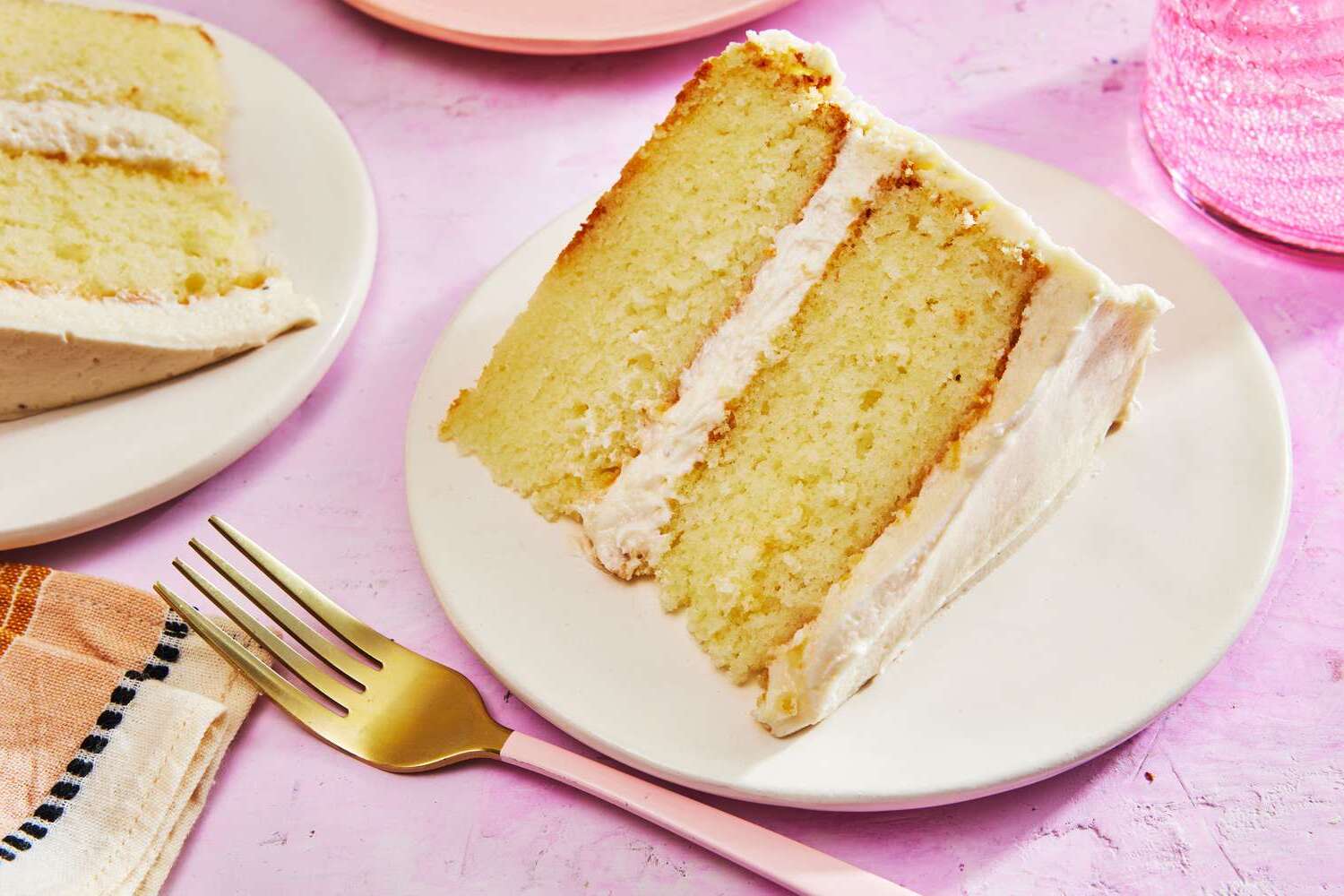
Ingredients For White Cake Recipe
All-purpose flour: The main dry ingredient that gives the cake its structure.
Baking powder: A leavening agent that helps the cake rise and become fluffy.
Salt: Enhances the flavors and balances the sweetness.
Sugar: Adds sweetness and helps with the cake’s texture.
Butter: Adds richness and moisture; should be softened for easy mixing.
Egg whites: Provide lightness and help the cake rise without adding extra fat.
Vanilla extract: Adds a warm, sweet flavor that makes the cake taste homemade.
Milk: Adds moisture and helps combine the ingredients smoothly.
Technique Tip for Baking
One of the most important steps in this White Cake Recipe is how you mix the flour mixture and the milk into the butter mixture. The recipe says to add them alternately, starting and ending with the flour mixture. Here’s how to do that so your cake turns out soft and fluffy:
- Start by adding about a third of the dry flour mixture to the butter and sugar bowl. Use a spoon or a mixer on low speed to gently mix it in.
- Next, pour in about half of the milk. Mix again, but don’t overdo it—just enough so you don’t see dry flour.
- Add another third of the flour mixture and mix lightly.
- Pour in the rest of the milk and mix again.
- Finally, add the last bit of the flour mixture and stir just until everything is combined.
Doing it this way helps keep the batter smooth and prevents it from getting too thick or lumpy. If you dump all the dry ingredients in at once, the batter can get tough because the flour develops too much gluten when mixed too much. Also, adding the milk slowly keeps the batter moist and easy to pour into your pans.
When I first tried this, I mixed everything all at once because I was in a hurry. The cake turned out a little dense and not as soft as I wanted. After I started adding the dry and wet ingredients one at a time, my cakes became lighter and had a better texture. It’s a small step that makes a big difference! Plus, it’s kind of fun to see the batter change as you add each part.
Suggested Side Dishes
Alternative Ingredients
all-purpose flour - Substitute with cake flour: Cake flour has a lower protein content, resulting in a lighter and more tender cake.
all-purpose flour - Substitute with gluten-free flour blend: For a gluten-free option, use a blend that mimics the properties of all-purpose flour.
baking powder - Substitute with baking soda and cream of tartar: Use ¼ teaspoon baking soda and ½ teaspoon cream of tartar for each teaspoon of baking powder.
salt - Substitute with kosher salt: Kosher salt has a coarser grain and can be used in the same amount for a similar flavor.
sugar - Substitute with honey: Use 1 cup of honey for every 1.5 cups of sugar, and reduce the liquid in the recipe by ¼ cup.
sugar - Substitute with coconut sugar: Use an equal amount of coconut sugar for a lower glycemic index and a slight caramel flavor.
softened butter - Substitute with margarine: Margarine can be used in the same amount for a similar texture and flavor.
softened butter - Substitute with coconut oil: Use an equal amount of coconut oil for a dairy-free option and a slight coconut flavor.
egg whites - Substitute with aquafaba: Use 3 tablespoon of aquafaba (the liquid from a can of chickpeas) for each egg white for a vegan option.
egg whites - Substitute with flaxseed meal and water: Mix 1 tablespoon of flaxseed meal with 3 tablespoon of water for each egg white as a vegan alternative.
vanilla extract - Substitute with almond extract: Use half the amount of almond extract for a different but complementary flavor.
vanilla extract - Substitute with maple syrup: Use an equal amount of maple syrup for a unique flavor twist.
milk - Substitute with almond milk: Use an equal amount of almond milk for a dairy-free option.
milk - Substitute with buttermilk: Use an equal amount of buttermilk for a tangy flavor and tender crumb.
Other Alternative Recipes
How to Store or Freeze Your Cake
Allow the white cake to cool completely on wire racks before storing. This prevents condensation from forming, which can make the cake soggy.
Wrap each cake layer tightly in plastic wrap. Ensure there are no air pockets to maintain freshness and prevent the cake from drying out.
For short-term storage, place the wrapped cake layers in an airtight container. Store at room temperature for up to 2 days. If your kitchen is particularly warm, consider refrigerating to avoid spoilage.
For longer storage, once the cake layers are wrapped in plastic wrap, add an extra layer of aluminum foil. This provides additional protection against freezer burn.
Label the wrapped cake layers with the date before placing them in the freezer. This helps you keep track of how long they have been stored.
Freeze the cake layers for up to 3 months. When ready to use, thaw them in the refrigerator overnight. This gradual thawing process helps maintain the cake's texture and moisture.
If you have already frosted the white cake, place it in the refrigerator for about 30 minutes to firm up the frosting. Then, wrap the entire cake in plastic wrap, followed by a layer of aluminum foil.
For individual slices, wrap each slice in plastic wrap and then place them in a resealable freezer bag. This method allows you to thaw and enjoy single servings without defrosting the entire cake.
When ready to serve a frozen white cake, remove the wrapping and let it sit at room temperature for about 1-2 hours. This ensures the cake is soft and ready to enjoy.
If you notice any condensation on the cake after thawing, gently dab it with a paper towel to remove excess moisture.
How to Reheat Leftovers
Preheat your oven to 300°F (150°C). Wrap the leftover white cake in aluminum foil to prevent it from drying out. Place it on a baking sheet and heat for about 15-20 minutes, or until warm.
For a quicker method, use a microwave. Place a slice of cake on a microwave-safe plate. Cover it with a damp paper towel to retain moisture. Microwave on medium power for 20-30 seconds. Check and repeat if necessary.
If you have a steamer, you can steam the cake to keep it moist. Wrap the cake in parchment paper and place it in the steamer for about 5-7 minutes.
For a more decadent option, heat a skillet over medium heat. Add a small amount of butter and let it melt. Place a slice of cake in the skillet and toast each side for about 1-2 minutes until golden brown. This method adds a delightful crispiness to the cake.
If you have an air fryer, preheat it to 320°F (160°C). Place the cake slices in the basket, ensuring they don't overlap. Heat for 3-5 minutes, checking frequently to avoid overcooking.
Best Tools for Baking
Oven: Preheat to 350°F (175°C) to bake the cake evenly.
Cake pans: Grease and flour these to prevent the cake from sticking.
Mixing bowl: Use one for the dry ingredients and another for the wet ingredients.
Electric mixer: Beat the butter and sugar until light and fluffy, and mix in the egg whites and vanilla extract.
Measuring cups: Measure out the flour, sugar, and milk accurately.
Measuring spoons: Measure the baking powder, salt, and vanilla extract precisely.
Spatula: Scrape down the sides of the mixing bowl to ensure all ingredients are well combined.
Wire racks: Cool the cakes completely after baking to prevent them from becoming soggy.
Toothpick: Check for doneness by inserting it into the center of the cake; it should come out clean.
Cooling racks: Allow the cakes to cool evenly after removing them from the pans.
How to Save Time on Baking
Pre-measure ingredients: Measure and set out all ingredients before you start. This will streamline the baking process.
Room temperature butter: Soften butter quickly by cutting it into small pieces and letting it sit for 10 minutes.
Separate egg whites: Separate egg whites in advance and let them come to room temperature for better volume when beaten.
Use a stand mixer: A stand mixer can save time and effort when beating butter and sugar.
Prepare pans early: Grease and flour your cake pans before starting to mix the batter.
Clean as you go: Cleaning up while baking helps save time and reduces mess at the end.
White Cake Recipe
Ingredients
Cake Ingredients
- 2.5 cups all-purpose flour
- 2 teaspoon baking powder
- 0.5 teaspoon salt
- 1.5 cups sugar
- 0.5 cup butter softened
- 3 egg whites
- 2 teaspoon vanilla extract
- 1 cup milk
Instructions
- Preheat your oven to 350°F (175°C). Grease and flour your cake pans.
- In a mixing bowl, combine flour, baking powder, and salt. Set aside.
- In another bowl, beat the butter and sugar until light and fluffy. Add egg whites one at a time, beating well after each addition. Stir in vanilla extract.
- Alternate adding the flour mixture and milk to the butter mixture, beginning and ending with the flour mixture. Mix until just combined.
- Pour batter into prepared pans. Bake for 25-30 minutes or until a toothpick inserted into the center comes out clean. Cool in pans for 10 minutes, then remove to wire racks to cool completely.
Nutritional Value
Keywords
Suggested Appetizers and Main Courses
More Amazing Recipes to Try 🙂
- Maryland Crab Cakes Recipe25 Minutes
- Buffalo Chicken Wing Sauce Recipe15 Minutes
- Pineapple Martini Recipe5 Minutes
- Cucumber Pasta Salad Recipe25 Minutes
- Sausage Egg Muffins Recipe30 Minutes
- Authentic Mexican Hot Sauce Recipe30 Minutes
- Tortas Recipe25 Minutes
- Jack Daniels Sauce Recipe40 Minutes





Leave a Reply