
I’m really happy to share this asparagus pea risotto recipe with you because it’s one of those dishes that feels fancy but is actually pretty simple to make. I love how creamy and comforting it is, especially when fresh asparagus is in season. Keep reading, and you’ll see how easy it is to bring this tasty meal to your table.
Some ingredients in this recipe might be new if you haven’t cooked risotto before. Arborio rice is a special kind of rice that gets creamy as it cooks, so look for it in the rice or pasta aisle at the supermarket. Frozen peas are easy to find and save time, and fresh asparagus is best when it’s firm and bright green. Parmesan cheese adds a nice salty flavor, so try to get a good-quality block to grate yourself if you can.
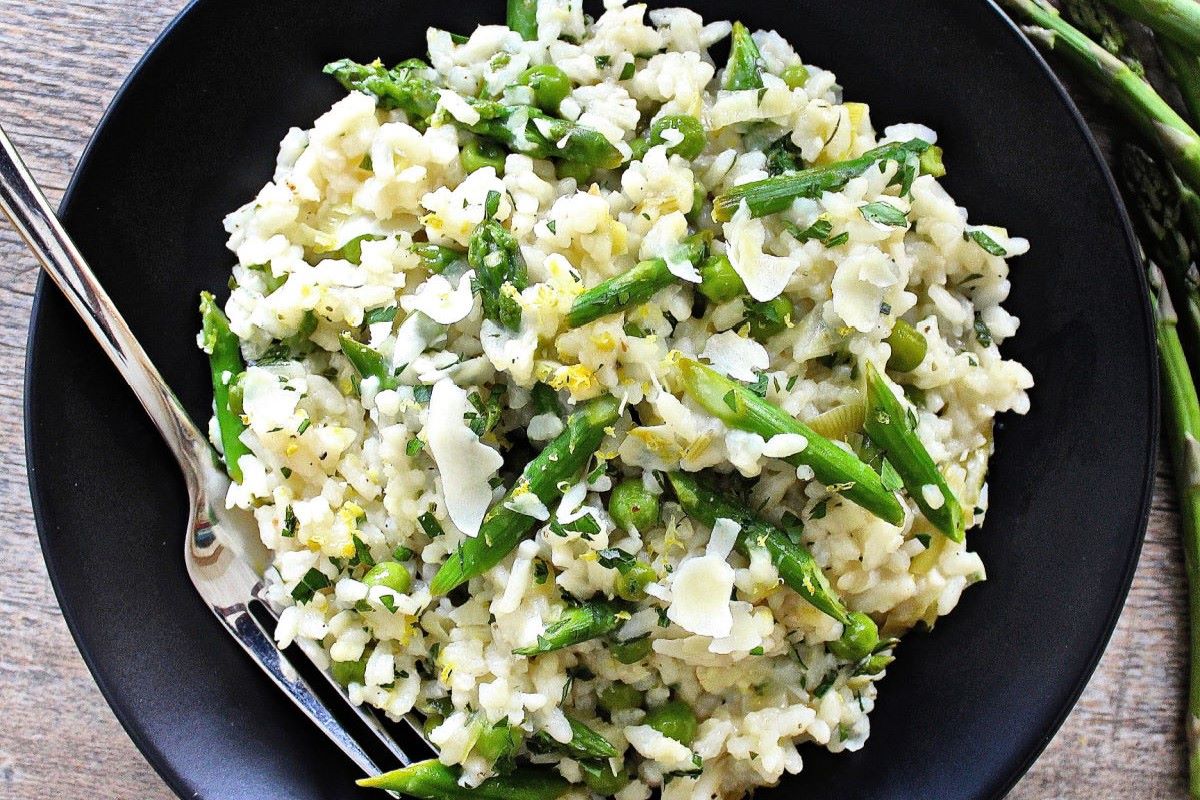
Ingredients for Asparagus Pea Risotto Recipe
Arborio rice: A short-grain rice that becomes creamy when cooked, perfect for risotto.
Asparagus: Fresh green stalks that add a tender crunch and fresh flavor.
Frozen peas: Sweet peas that cook quickly and add color and texture.
Onion: Adds a mild, savory base flavor when cooked.
Garlic: Gives a fragrant and slightly spicy taste.
Vegetable broth: Liquid used to cook the rice and add flavor.
Parmesan cheese: A salty, nutty cheese that makes the risotto creamy and rich.
Olive oil: Used for cooking the onion and garlic, adds a smooth texture.
Salt and pepper: Basic seasonings to bring out all the flavors.
Technique Tip for This Recipe
One of the most important steps in making this Asparagus Pea Risotto is how you add the warm vegetable broth to the arborio rice. Instead of pouring it all in at once, you add it little by little, one ladle at a time. Here’s how to do it:
- Use a ladle to scoop some warm broth from your pot.
- Pour just enough to cover the rice in the pan.
- Stir the rice gently but often so it doesn’t stick.
- Wait until the rice has absorbed almost all the liquid before adding the next ladle.
- Repeat this process until the rice is creamy and cooked through, which usually takes about 20-25 minutes.
Doing it this way helps the rice slowly soak up the broth and release its natural starches, making the risotto creamy without needing cream or extra cheese. If you dump all the liquid in at once, the rice won’t cook evenly and the texture can get mushy or watery. Taking your time with this step makes the dish taste richer and feel just right in your mouth.
When I first tried making risotto, I was impatient and poured in too much broth at once. The rice ended up soggy and not as tasty. Now, I remind myself to be patient and stir gently. It’s kind of like giving the rice a little bath, letting it soak up all the flavor slowly. Also, keeping the broth warm helps it absorb better, so I always heat it on the stove while I cook the rice. It’s a small step that makes a big difference!
Suggested Side Dishes
Alternative Ingredients
arborio rice - Substitute with carnaroli rice: Carnaroli rice has a similar creamy texture and is often used in risotto recipes.
asparagus - Substitute with broccoli: Broccoli provides a similar crunch and green color, making it a good alternative.
frozen peas - Substitute with edamame: Edamame offers a similar texture and a slightly different but complementary flavor.
onion - Substitute with shallots: Shallots have a milder and sweeter flavor, which can add a subtle complexity to the dish.
garlic - Substitute with garlic powder: Garlic powder can be used in place of fresh garlic, though it will have a slightly different intensity.
vegetable broth - Substitute with chicken broth: Chicken broth can provide a richer flavor, though it will make the dish non-vegetarian.
parmesan cheese - Substitute with pecorino romano: Pecorino Romano has a similar texture and a slightly sharper flavor.
olive oil - Substitute with butter: Butter can add a richer, creamier texture to the risotto.
salt - Substitute with soy sauce: Soy sauce can add a different depth of umami flavor, though it will also change the color slightly.
pepper - Substitute with white pepper: White pepper has a milder flavor and won't alter the color of the dish.
Other Alternative Recipes
How to Store / Freeze Your Dish
- Allow the risotto to cool completely before storing. This helps prevent condensation, which can make the rice mushy.
- Transfer the cooled asparagus pea risotto into an airtight container. For best results, use a shallow container to ensure even cooling.
- Store the container in the refrigerator. The risotto will keep well for up to 3-4 days.
- To reheat, place the risotto in a saucepan over medium heat. Add a splash of vegetable broth or water to help loosen the texture and stir frequently until heated through.
- For freezing, portion the risotto into individual servings. This makes it easier to thaw and reheat only what you need.
- Use freezer-safe containers or heavy-duty freezer bags. If using bags, lay them flat in the freezer to save space and ensure even freezing.
- Label each container or bag with the date. The risotto can be frozen for up to 2 months.
- To thaw, transfer the frozen risotto to the refrigerator and let it thaw overnight. Alternatively, you can use the defrost setting on your microwave.
- Reheat the thawed risotto in a saucepan over medium heat, adding a bit of vegetable broth or water to restore its creamy texture. Stir frequently until heated through.
- Garnish with additional parmesan cheese and a drizzle of olive oil before serving to enhance the flavor and presentation.
How to Reheat Leftovers
Stovetop Method: Place the leftover asparagus pea risotto in a saucepan. Add a splash of vegetable broth or water to help loosen it up. Heat over medium-low heat, stirring frequently, until warmed through. This method helps maintain the creamy texture.
Microwave Method: Transfer the risotto to a microwave-safe dish. Add a tablespoon of vegetable broth or water and cover with a microwave-safe lid or plastic wrap. Heat on medium power in 1-minute intervals, stirring in between, until the risotto is hot. This method is quick and convenient.
Oven Method: Preheat your oven to 350°F (175°C). Spread the leftover risotto in an even layer in an oven-safe dish. Add a few tablespoons of vegetable broth or water and cover with foil. Bake for about 15-20 minutes, or until heated through. This method is great for reheating larger portions.
Double Boiler Method: Fill a pot with a couple of inches of water and bring to a simmer. Place a heatproof bowl with the risotto over the pot, ensuring the bottom of the bowl doesn't touch the water. Stir occasionally until the risotto is heated through. This gentle method helps prevent the rice from drying out.
Risotto Cakes: Transform your leftovers into a new dish! Form the risotto into small patties and coat lightly with breadcrumbs. Heat a bit of olive oil in a skillet over medium heat and fry the patties until golden brown on both sides. This method adds a delightful crispy texture.
Essential Tools for This Recipe
Large saucepan: used for cooking the risotto and ensuring even heat distribution.
Wooden spoon: ideal for stirring the risotto to prevent it from sticking to the pan.
Ladle: helps in adding the warm vegetable broth to the rice one scoop at a time.
Cutting board: provides a stable surface for chopping the onion, garlic, and asparagus.
Chef's knife: essential for finely chopping the onion and garlic, and cutting the asparagus into pieces.
Measuring cups: used to measure out the arborio rice and vegetable broth accurately.
Grater: necessary for grating the parmesan cheese.
Small bowl: useful for holding the grated parmesan cheese until it's needed.
Microwave-safe bowl: can be used to warm the vegetable broth if it's not already warm.
Tongs: helpful for handling the asparagus pieces when adding them to the risotto.
Serving spoon: used to serve the risotto once it's ready.
Pepper mill: for freshly grinding pepper to taste.
Salt shaker: for adding salt to taste.
How to Save Time on This Recipe
Prep ingredients ahead: Chop the onion, garlic, and asparagus in advance to streamline the cooking process.
Use pre-grated cheese: Save time by using pre-grated parmesan cheese instead of grating it yourself.
Warm broth in microwave: Heat the vegetable broth in the microwave to keep it warm and ready for use.
Measure ingredients beforehand: Measure out the arborio rice and other ingredients before starting to cook.
Use a timer: Set a timer for each step to ensure you stay on track and avoid overcooking.
Asparagus Pea Risotto
Ingredients
Main Ingredients
- 1 cup Arborio rice
- 1 bunch Asparagus trimmed and cut into 1-inch pieces
- 1 cup Frozen peas
- 1 small Onion finely chopped
- 2 cloves Garlic minced
- 4 cups Vegetable broth kept warm
- ½ cup Parmesan cheese grated
- 2 tablespoons Olive oil
- to taste Salt and pepper
Instructions
- Heat the olive oil in a large saucepan over medium heat. Add the onion and garlic, and cook until softened.
- Add the Arborio rice and cook, stirring constantly, for 2-3 minutes until the rice is lightly toasted.
- Begin adding the warm vegetable broth, one ladle at a time, stirring frequently. Allow the liquid to be absorbed before adding the next ladle.
- After about 15 minutes, add the asparagus pieces. Continue to add broth and stir until the rice is creamy and cooked through, about 20-25 minutes total.
- Stir in the frozen peas and cook for another 2-3 minutes until heated through.
- Remove from heat and stir in the grated Parmesan cheese. Season with salt and pepper to taste.
- Serve immediately, garnished with additional Parmesan cheese if desired.
Nutritional Value
Keywords
Suggested Appetizers and Desserts
More Amazing Recipes to Try 🙂
- Cocktail Sauce Recipe5 Minutes
- Mexican Sopes Recipe40 Minutes
- Traditional Mexican Street Tacos Recipe30 Minutes
- Eggless French Toast Recipe20 Minutes
- Traditional Gyro Meat Recipe1 Hours 20 Minutes
- Sea Scallops and Angel Hair Pasta Recipe30 Minutes
- Swedish Glogg Recipe40 Minutes
- Acini di Pepe Salad Recipe25 Minutes






Leave a Reply