

I love how fresh and simple this vegetable salad recipe is. It’s one of my go-to dishes when I want something light but full of flavor. I think you’ll enjoy how easy it is to put together and how bright the flavors taste.
Most of the ingredients in this salad are common and easy to find, like lettuce, tomatoes, and cucumber. If you don’t usually have red onion or fresh lemon juice at home, those are the only things you might want to pick up at the supermarket. Fresh lemon juice really makes the dressing taste bright and fresh, so it’s worth grabbing if you can.
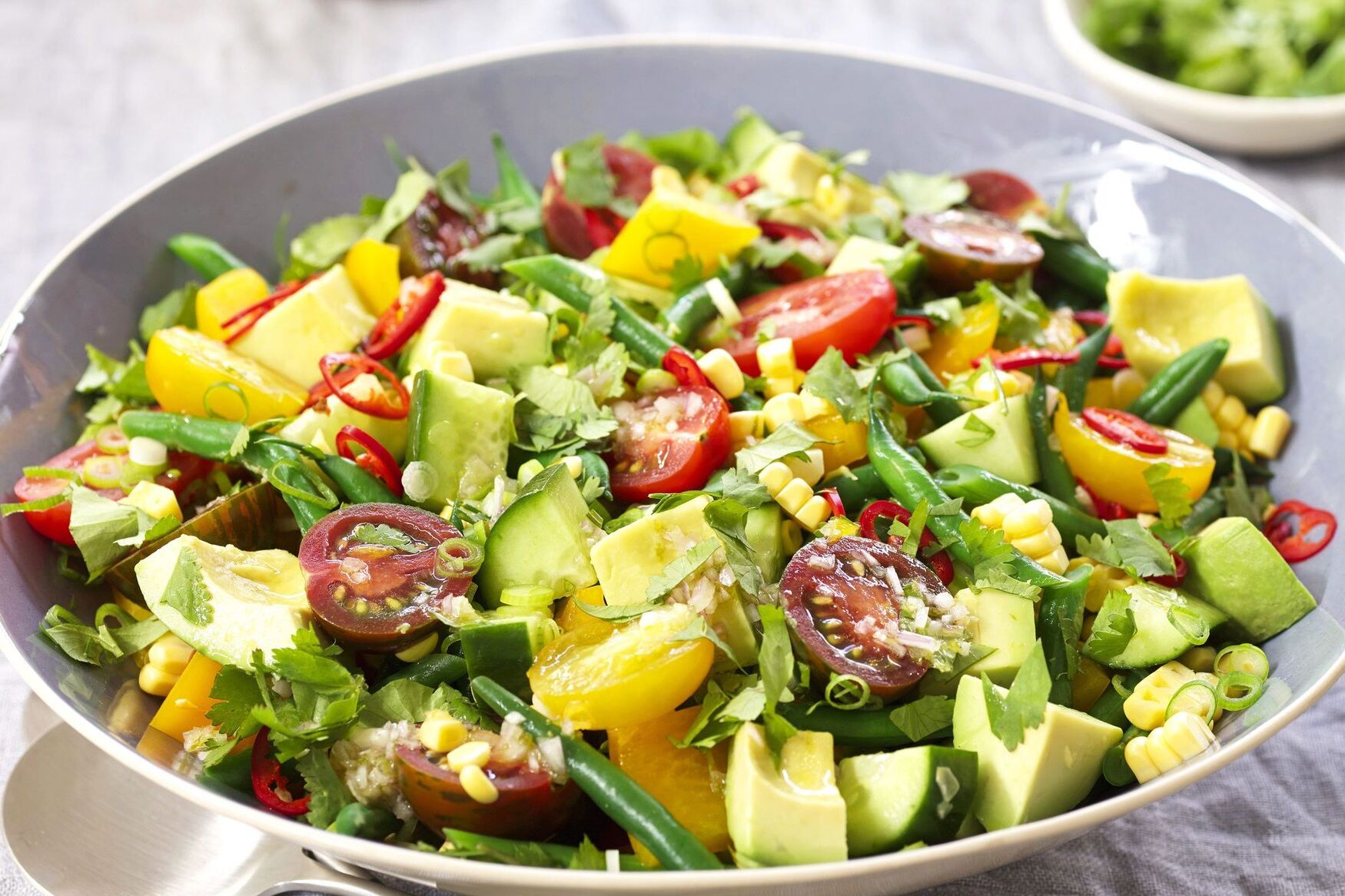
Ingredients For Vegetable Salad Recipe
Lettuce: A leafy green that adds crunch and freshness to the salad.
Cherry tomatoes: Small, sweet tomatoes that add color and juiciness.
Cucumber: Adds a cool, crisp texture to balance the other veggies.
Red onion: Thinly sliced for a mild, slightly sweet onion flavor.
Olive oil: Used to dress the salad and add a smooth richness.
Lemon juice: Freshly squeezed to give the salad a bright, tangy kick.
Salt: Enhances all the flavors in the salad.
Black pepper: Adds a little bit of spice and depth.
Technique Tip for This Recipe
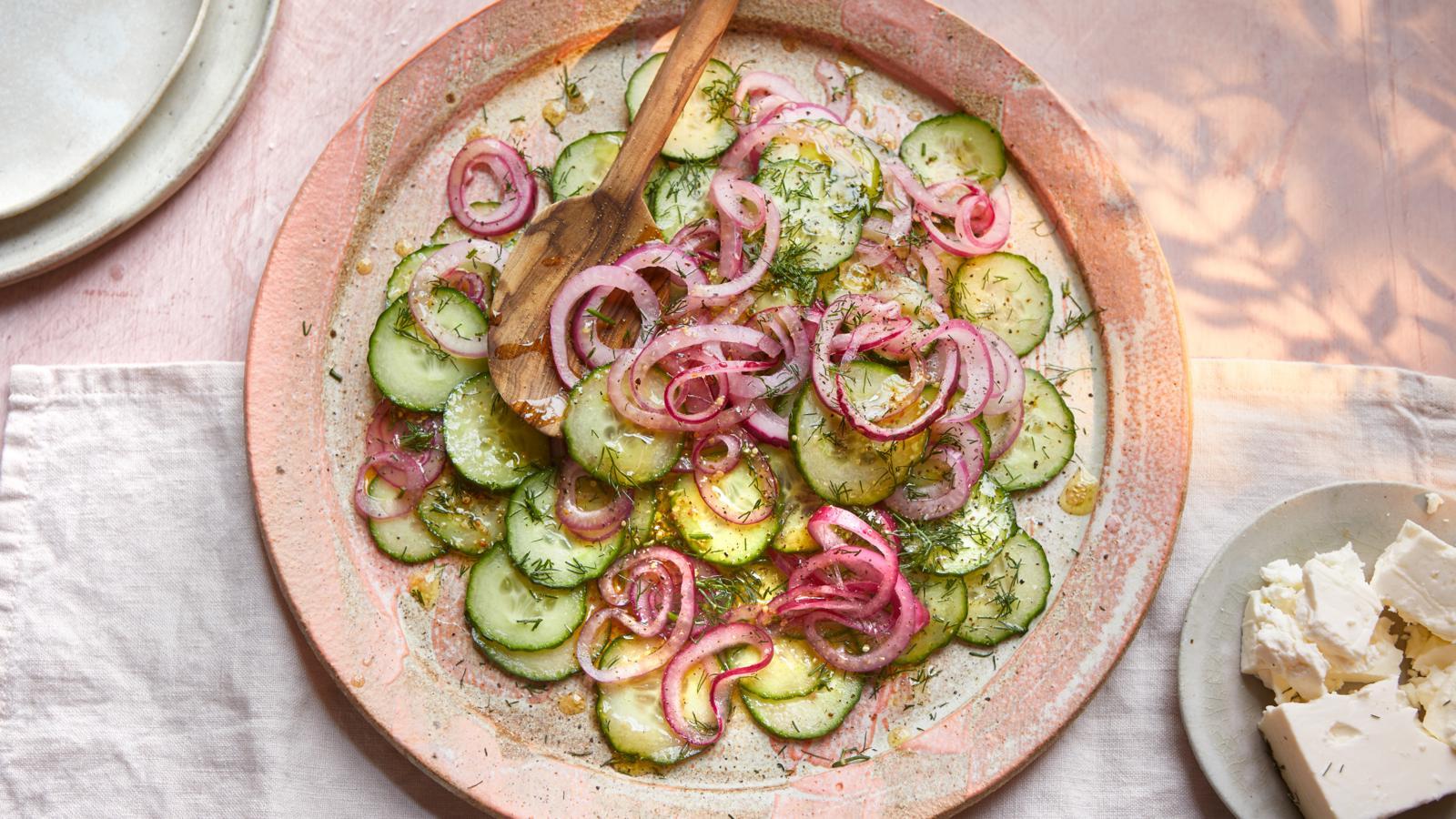
One simple trick that really makes a difference in this vegetable salad recipe is how to thinly slice the red onion. When you slice onions too thick, they can overpower the other flavors and feel a bit harsh. But thin slices blend nicely and add just the right amount of zing. Here’s how you can do it step by step:
- Peel off the outer skin of the onion and cut off the ends.
- Cut the onion in half from top to bottom, so you have two flat sides.
- Place one half flat side down on the cutting board to keep it steady.
- Hold the onion firmly with your fingers curled under to protect them.
- Use a sharp knife to slice across the onion as thinly as you can, aiming for slices about the thickness of a coin or thinner.
Doing this makes the onion easier to eat raw in the salad because the thin slices are less strong and more pleasant. It also helps the lemon juice and olive oil coat the pieces better, spreading flavor evenly.
When I first started making salads, I used to slice the onion pretty thick, and it was a little too much for my taste buds. Once I learned to slice thinly, the whole salad tasted fresher and lighter. A little tip: if you want to soften the onion even more, you can soak the slices in cold water for 5 minutes before adding them to the salad. It takes away some sharpness but keeps the crunch.
So next time you’re chopping red onion for a salad, try slicing thin and see how it changes the flavor. It’s a small step that makes your vegetable salad taste even better!
Suggested Side Dishes
Alternative Ingredients
chopped lettuce - Substitute with spinach: Spinach provides a similar leafy texture and is packed with nutrients.
halved cherry tomatoes - Substitute with grape tomatoes: Grape tomatoes have a similar sweetness and size, making them a great alternative.
sliced cucumber - Substitute with zucchini: Zucchini offers a similar crunch and can be eaten raw in salads.
thinly sliced red onion - Substitute with shallots: Shallots have a milder flavor and can add a subtle sweetness to the salad.
olive oil - Substitute with avocado oil: Avocado oil has a similar healthy fat profile and a neutral flavor.
freshly squeezed lemon juice - Substitute with lime juice: Lime juice provides a similar acidity and freshness to the salad.
salt - Substitute with sea salt: Sea salt can provide a more complex flavor profile.
freshly ground black pepper - Substitute with white pepper: White pepper offers a similar spiciness but with a slightly different flavor note.
Other Alternative Recipes Similar to This Salad
How To Store / Freeze Your Salad
- Ensure the vegetable salad is fresh and crisp by storing it in an airtight container. This helps maintain the lettuce and other vegetables at their peak freshness.
- If you plan to store the salad for more than a day, keep the dressing separate. This prevents the lettuce and other vegetables from becoming soggy.
- For optimal freshness, store the salad in the refrigerator. It should be consumed within 2-3 days for the best taste and texture.
- If you need to freeze the salad, note that lettuce and other vegetables with high water content may not freeze well. They can become mushy upon thawing.
- To freeze, place the vegetables in a freezer-safe bag or container. Remove as much air as possible to prevent freezer burn.
- Label the container with the date so you can keep track of how long it has been stored.
- When ready to use, thaw the vegetables in the refrigerator. For best results, add fresh lettuce and other vegetables to the thawed mixture to enhance texture and flavor.
- Always taste and adjust the seasoning with salt and freshly ground black pepper after thawing, as freezing can sometimes dull the flavors.
How To Reheat Leftovers
Gently warm the vegetable salad in a skillet over low heat for 2-3 minutes, stirring occasionally. This method helps to slightly soften the lettuce and cherry tomatoes without making them too soggy.
Place the vegetable salad in a microwave-safe dish and cover it with a damp paper towel. Microwave on low power for 30-second intervals, stirring in between, until the salad is just warmed through.
For a unique twist, spread the vegetable salad on a baking sheet and broil on low for 1-2 minutes. This can add a slight char to the cherry tomatoes and red onion, enhancing their flavors.
If you prefer a more refreshing option, skip reheating and instead toss the leftover vegetable salad with a bit of extra olive oil and lemon juice to revive its flavors before serving chilled.
Best Tools for This Recipe
Large mixing bowl: A spacious bowl to combine and toss all the salad ingredients together.
Chef's knife: A sharp knife for chopping lettuce, halving cherry tomatoes, and slicing cucumber and red onion.
Cutting board: A sturdy surface to safely chop and slice the vegetables.
Measuring cups: Tools to accurately measure the lettuce, cherry tomatoes, and cucumber.
Measuring spoons: Tools to measure the olive oil and lemon juice precisely.
Salad tongs: Handy for tossing the salad ingredients together evenly.
Citrus juicer: Useful for extracting fresh lemon juice efficiently.
Refrigerator: To chill the salad for 10-15 minutes before serving, if desired.
How to Save Time on Making This Salad
Pre-chop vegetables: Prepare the lettuce, cherry tomatoes, cucumber, and red onion in advance and store them in airtight containers in the refrigerator.
Use a salad spinner: Quickly dry your lettuce and other greens with a salad spinner to save time on drying.
Pre-make dressing: Mix the olive oil and lemon juice ahead of time and store in a jar. Shake well before using.
Batch preparation: Double or triple the vegetable salad ingredients and store in separate containers for multiple meals throughout the week.
Vegetable Salad Recipe
Ingredients
Main Ingredients
- 2 cups Lettuce chopped
- 1 cup Cherry Tomatoes halved
- 1 cup Cucumber sliced
- ½ cup Red Onion thinly sliced
- ¼ cup Olive Oil
- 2 tablespoon Lemon Juice freshly squeezed
- to taste Salt
- to taste Black Pepper freshly ground
Instructions
- 1. In a large mixing bowl, combine the chopped lettuce, halved cherry tomatoes, sliced cucumber, and thinly sliced red onion.
- 2. Drizzle the olive oil and freshly squeezed lemon juice over the vegetables.
- 3. Season with salt and freshly ground black pepper to taste.
- 4. Toss everything together until well combined.
- 5. Serve immediately or chill in the refrigerator for 10-15 minutes before serving.
Nutritional Value
Keywords
More Amazing Recipes to Try 🙂
- Refreshing Cucumber Lemonade Recipe10 Minutes
- POG Juice Recipe5 Minutes
- Singapore Sling Cocktail Recipe5 Minutes
- Spicy Seafood Sauce Recipe30 Minutes
- Veggie Spring Rolls with Mango Dipping Sauce Recipe30 Minutes
- Pickled Watermelon Rinds Recipe30 Minutes
- Cocktail Sauce Recipe5 Minutes
- Mexican Sopes Recipe40 Minutes







Leave a Reply