
I’m really happy to share this bibimbap recipe with you because it’s one of my favorite meals to make when I want something colorful and full of flavor. It’s fun to put together, and every bite feels like a little celebration. I hope you enjoy making it as much as I do!
Some ingredients in this recipe might be new if you haven’t cooked Korean food before. The gochujang, which is a spicy Korean chili paste, is the key to giving bibimbap its unique taste. You can usually find it in the international or Asian section of most supermarkets. Also, thinly sliced beef is best for this dish, so look for cuts labeled for stir-frying or ask the butcher to slice it thinly for you.
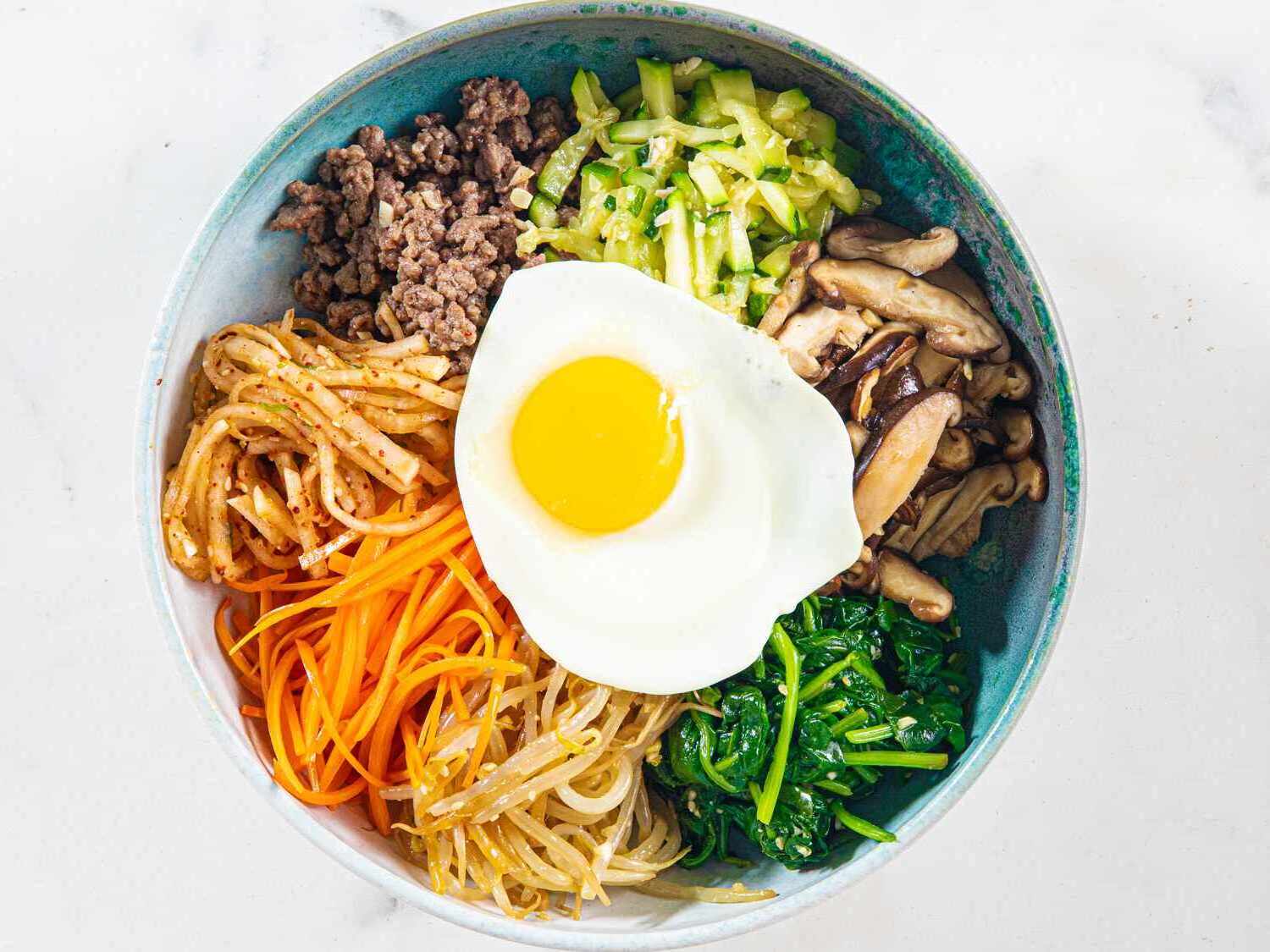
Ingredients For Bibimbap Recipe
Cooked rice: The base of bibimbap, providing a soft and warm foundation for all the toppings.
Thinly sliced beef: Adds a savory and meaty flavor that balances the fresh vegetables.
Blanched spinach: Softened spinach that adds a mild, slightly sweet taste and a pop of green color.
Julienned carrots: Thin strips of carrots that bring crunch and a touch of natural sweetness.
Julienned zucchini: Adds a fresh and slightly crisp texture with a mild flavor.
Fried eggs: Sunny side up eggs add richness and a creamy yolk that mixes well with the other ingredients.
Korean chili paste gochujang: A spicy, slightly sweet paste that gives bibimbap its signature kick.
Technique Tip for This Recipe
One of the coolest parts of making bibimbap is cooking the beef just right. When you cook thinly sliced beef, it’s best to do it in a hot pan so it browns nicely and stays juicy. Here’s how you can do it step by step:
- Heat your frying pan over medium-high heat until it’s really hot. You can test by flicking a tiny drop of water in—if it sizzles and evaporates quickly, you’re good to go.
- Add a little bit of oil to the pan and swirl it around so the surface is coated.
- Spread the thin slices of beef out in a single layer. Don’t crowd the pan because that makes the meat steam instead of brown.
- Let the beef cook without moving it for about 1-2 minutes. This helps create a nice brown crust.
- Flip the slices and cook the other side for another minute or so until browned and cooked through.
Doing this makes your beef taste way better because browning adds flavor and keeps the meat tender. If you try to cook too many slices at once, the pan cools down and the beef ends up soggy instead of crispy on the edges.
When I first made bibimbap, I piled all the beef in the pan at once and it took forever to brown. The meat just boiled in its own juices, which wasn’t very tasty. Now, I cook it in batches if I need to, and it’s so much better. Plus, it’s fun to hear that satisfying sizzle when the beef hits the hot pan!
Suggested Side Dishes
Alternative Ingredients
cooked rice - Substitute with quinoa: Quinoa is a high-protein grain that provides a similar texture and nutritional profile to rice.
thinly sliced beef - Substitute with tofu: Tofu is a great plant-based protein that can absorb flavors well, making it a suitable alternative for vegetarians or those avoiding red meat.
blanched spinach - Substitute with kale: Kale offers a similar texture and nutritional benefits, and can be blanched in the same way as spinach.
julienned carrots - Substitute with bell peppers: Bell peppers add a sweet crunch and vibrant color, making them a good alternative to carrots.
julienned zucchini - Substitute with cucumber: Cucumber provides a refreshing crunch and can be julienned similarly to zucchini.
fried eggs - Substitute with poached eggs: Poached eggs offer a similar runny yolk and can be a healthier option compared to fried eggs.
korean chili paste gochujang - Substitute with sriracha: Sriracha provides a similar spicy kick and can be used as a more readily available alternative to gochujang.
Alternative Recipes Similar to This Dish
How to Store or Freeze Your Dish
Allow the cooked rice to cool completely before storing. Place it in an airtight container to prevent it from drying out.
Store the blanched spinach in a separate container. Make sure to squeeze out any excess water before storing to maintain its texture.
For the julienned carrots and zucchini, keep them in individual containers or plastic bags. This will help preserve their freshness and prevent them from becoming soggy.
The thinly sliced beef should be stored in an airtight container. If you plan to freeze it, consider portioning it out for easier reheating.
Fried eggs are best enjoyed fresh, but if you must store them, place them in a container with a tight-fitting lid. Reheat gently to avoid overcooking the yolk.
Korean chili paste gochujang can be stored in its original container in the refrigerator. Ensure the lid is tightly sealed to maintain its flavor and consistency.
When ready to enjoy your bibimbap again, reheat the rice and beef separately in the microwave or on the stovetop. Add a splash of water to the rice to keep it moist.
Reheat the vegetables briefly, just enough to warm them without losing their crunch.
Assemble your bibimbap as you would when freshly made, topping it with a freshly fried egg if possible for the best experience.
Add a dollop of gochujang and mix everything together just before eating to ensure all the flavors meld beautifully.
How to Reheat Leftovers
Use a non-stick skillet: Heat a non-stick skillet over medium heat. Add a small amount of olive oil or sesame oil. Spread the leftover bibimbap evenly in the skillet. Cook for about 5-7 minutes, stirring occasionally, until everything is heated through. This method helps to keep the rice slightly crispy, adding a delightful texture.
Microwave: Place the bibimbap in a microwave-safe dish. Cover with a microwave-safe lid or a damp paper towel to retain moisture. Heat on medium power for 2-3 minutes, stirring halfway through. Check if it's heated evenly and add more time if necessary. This is a quick and convenient method but may not retain the original texture as well as other methods.
Oven: Preheat your oven to 350°F (175°C). Spread the bibimbap in an oven-safe dish and cover with aluminum foil to prevent drying out. Bake for about 15-20 minutes, or until heated through. This method is great for reheating larger portions and helps to maintain the dish's integrity.
Steamer: If you have a steamer, place the bibimbap in a heatproof dish and steam for about 10 minutes, or until heated through. This method helps to keep the rice moist and fluffy, similar to when it was freshly made.
Rice cooker: If you have a rice cooker with a reheat function, place the bibimbap in the cooker and use the reheat setting. This method is convenient and ensures even heating, especially for the rice.
Air fryer: Preheat your air fryer to 350°F (175°C). Place the bibimbap in the air fryer basket and heat for about 5-7 minutes, shaking the basket halfway through. This method can give a nice crispy texture to the rice and vegetables.
Essential Tools for This Recipe
Rice cooker: Used to cook the rice perfectly according to package instructions.
Large pot: Needed to blanch the spinach quickly and efficiently.
Colander: Useful for draining the blanched spinach.
Cutting board: Essential for julienning the carrots and zucchini.
Sharp knife: Necessary for slicing the beef thinly and julienning the vegetables.
Frying pan: Used to cook the beef until browned.
Spatula: Handy for flipping and frying the eggs sunny side up.
Serving bowls: Used to assemble and serve the bibimbap.
Measuring spoons: Needed to measure out the gochujang accurately.
How to Save Time on Preparation
Prep ingredients in advance: Wash, julienne, and blanch all vegetables ahead of time to streamline the cooking process.
Use a rice cooker: A rice cooker can save you time and ensure perfectly cooked rice without constant monitoring.
Batch cook beef: Cook the beef in larger quantities and store portions in the fridge or freezer for quick assembly later.
Multitask: While the rice is cooking, prepare the vegetables and cook the beef simultaneously.
Ready-made gochujang: Use store-bought gochujang to save time on making the sauce from scratch.
Bibimbap Recipe
Ingredients
Main Ingredients
- 2 cups Rice cooked
- 200 grams Beef thinly sliced
- 1 cup Spinach blanched
- 1 cup Carrots julienned
- 1 cup Zucchini julienned
- 4 Eggs fried
- 2 tablespoon Gochujang Korean chili paste
Instructions
- 1. Cook the rice according to package instructions.
- 2. Blanch the spinach and set aside.
- 3. Julienne the carrots and zucchini.
- 4. In a frying pan, cook the beef until browned.
- 5. Fry the eggs sunny side up.
- 6. Assemble the bibimbap by placing rice in a bowl and arranging the vegetables and beef on top. Add the fried egg and a dollop of gochujang.
Nutritional Value
Keywords
Suggested Appetizers and Desserts
More Amazing Recipes to Try 🙂
- Mexican Sopes Recipe40 Minutes
- Traditional Mexican Street Tacos Recipe30 Minutes
- Eggless French Toast Recipe20 Minutes
- Traditional Gyro Meat Recipe1 Hours 20 Minutes
- Sea Scallops and Angel Hair Pasta Recipe30 Minutes
- Swedish Glogg Recipe40 Minutes
- Acini di Pepe Salad Recipe25 Minutes
- Avocado Milkshake Recipe10 Minutes






Leave a Reply