

I love this seaweed salad because it’s fresh, light, and full of interesting flavors that feel a little different from everyday salads. It’s a great way to try something new and healthy without much effort. I think you’ll enjoy how simple it is to make and how tasty it turns out!
If you haven’t cooked with dried seaweed before, it might seem a bit unusual, but it’s easy to find in most grocery stores, especially in the Asian foods section. Just soak it in water to bring it back to life before using. The other ingredients like soy sauce, rice vinegar, and sesame oil are common pantry staples, but if you don’t have them, they’re worth picking up for this recipe and many others.
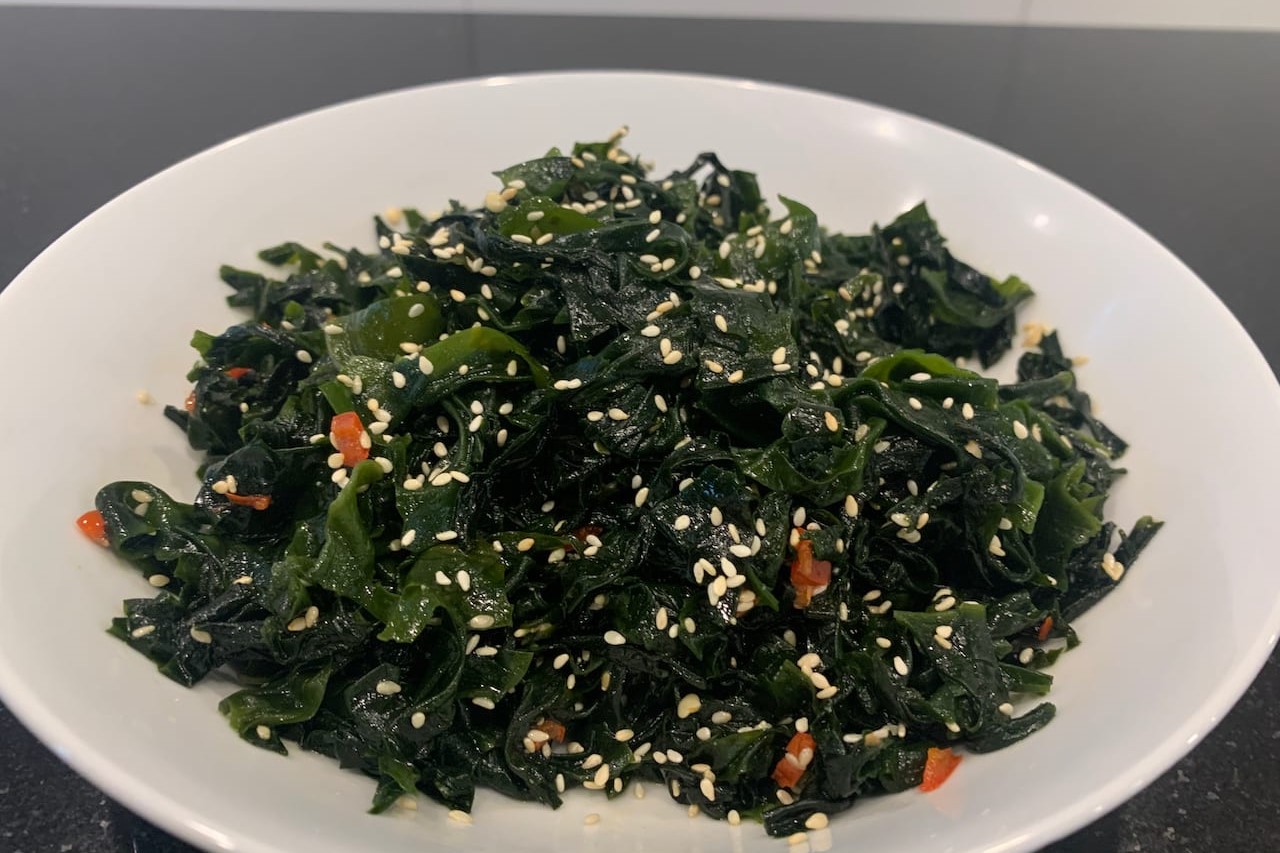
Ingredients For Seaweed Salad Recipe
Dried seaweed: This is the main ingredient, usually sold dried and needs to be soaked in water to soften.
Soy sauce: Adds a salty, savory flavor that brings the salad to life.
Rice vinegar: Gives a mild tanginess that balances the flavors.
Sesame oil: Adds a nutty aroma and richness.
Sugar: A little sweetness to round out the taste.
Toasted sesame seeds: Adds crunch and extra nutty flavor.
Red pepper flakes: Optional, for a bit of heat if you like spice.
Technique Tip for Preparing Seaweed Salad
One of the most important steps in this Seaweed Salad Recipe is soaking the dried seaweed properly. Here’s how to do it so your salad turns out just right:
- Put the dried seaweed in a bowl and cover it with cold water.
- Let it sit for about 10 minutes. You’ll see the seaweed start to puff up and get soft.
- After soaking, drain the water really well. You can use a strainer or just press the seaweed gently with your hands to squeeze out extra water.
Doing this step carefully makes a big difference because if the seaweed is too dry, it will be tough and chewy. But if it’s soaked just right, it becomes tender and easy to mix with the dressing. Also, draining it well helps the soy sauce and rice vinegar stick to the seaweed better, so every bite is full of flavor.
When I first tried this, I didn’t drain the seaweed enough, and my salad ended up watery and bland. After that, I made sure to press out the water carefully, and it made the salad taste so much better! A little tip: if you want to save time, you can soak the seaweed while you get the other ingredients ready. That way, everything comes together smoothly, and you’re not waiting around.
Soaking and draining might seem simple, but it really sets the stage for a tasty, fresh seaweed salad that’s perfect as a side or a light snack.
Suggested Side Dishes
Alternative Ingredients
soaked and drained dried seaweed - Substitute with nori sheets: Nori sheets can be rehydrated and shredded to mimic the texture and flavor of seaweed in salads.
soy sauce - Substitute with tamari: Tamari is a gluten-free alternative that provides a similar umami flavor to soy sauce.
rice vinegar - Substitute with apple cider vinegar: Apple cider vinegar has a mild acidity that can replace rice vinegar in dressings.
sesame oil - Substitute with olive oil: Olive oil can be used for a different but still rich flavor, though it lacks the nutty essence of sesame oil.
sugar - Substitute with honey: Honey adds sweetness and a slight floral note, making it a natural alternative to sugar.
toasted sesame seeds - Substitute with toasted sunflower seeds: Toasted sunflower seeds offer a similar crunch and nutty flavor to sesame seeds.
red pepper flakes - Substitute with cayenne pepper: Cayenne pepper provides a similar heat level and can be used sparingly to add spice.
Alternative Recipes Similar to Seaweed Salad
How to Store or Freeze This Seaweed Dish
To keep your seaweed salad fresh and vibrant, store it in an airtight container. This will prevent any unwanted odors from mingling with your delightful creation.
Place the container in the refrigerator. The cool environment will maintain the crispness of the seaweed and the tangy zest of the soy sauce and rice vinegar dressing.
For optimal freshness, consume the salad within 2-3 days. The flavors will meld beautifully over time, but the seaweed may lose its texture if left too long.
If you wish to prepare the salad in advance, consider storing the dressing separately. Combine with the seaweed just before serving to ensure a delightful crunch.
Freezing is not recommended for this salad. The delicate nature of seaweed doesn't fare well in the freezer, as it can become mushy upon thawing.
If you must freeze, do so without the dressing. Store the soaked seaweed in a freezer-safe bag, removing as much air as possible. Thaw in the refrigerator and dress just before serving.
Remember, the key to a perfect seaweed salad is freshness. Enjoy it at its peak for the best culinary experience.
How to Reheat Leftovers
Gently warm the seaweed salad in a non-stick skillet over low heat. Stir occasionally to ensure even heating, but be cautious not to overcook, as this can alter the texture of the delicate seaweed.
Use a steamer basket over simmering water for a gentle reheating method. Place the seaweed salad in the basket, cover, and steam for just a couple of minutes until it reaches the desired temperature.
If you're in a hurry, microwave the seaweed salad on a low power setting. Place it in a microwave-safe dish, cover with a damp paper towel to retain moisture, and heat in short intervals, checking frequently.
For a refreshing twist, consider serving the seaweed salad cold. Simply toss it with a splash of fresh lemon juice or a dash more soy sauce to revive its flavors before serving.
Essential Tools for Preparing Seaweed Salad
Mixing bowl: A large bowl used to combine and mix the ingredients for the dressing and to toss the seaweed salad.
Whisk: A utensil used to blend the soy sauce, rice vinegar, sesame oil, and sugar together until smooth.
Measuring cups: Used to accurately measure the amount of dried seaweed needed for the recipe.
Measuring spoons: Used to measure precise amounts of soy sauce, rice vinegar, sesame oil, sugar, and red pepper flakes.
Strainer: Used to drain the soaked seaweed thoroughly after it has been rehydrated.
Serving dish: A dish or plate used to present the seaweed salad once it is prepared.
Spoon or tongs: Used to toss the seaweed with the dressing to ensure it is evenly coated.
Time-Saving Tips for Making Seaweed Salad
Pre-soak the seaweed: Soak the dried seaweed in advance and store it in the fridge. This way, it's ready to use whenever you need it.
Batch mix the dressing: Prepare a larger batch of the soy sauce, rice vinegar, and sesame oil dressing. Store it in a jar for quick use in multiple salads.
Use pre-toasted sesame seeds: Buy toasted sesame seeds to skip the toasting step and save time.
Chill in advance: Make the salad ahead of time and let it chill in the fridge. This enhances the flavors and saves last-minute preparation time.
Seaweed Salad Recipe
Ingredients
Main Ingredients
- 1 cup Dried seaweed soaked and drained
- 1 tablespoon Soy sauce
- 1 tablespoon Rice vinegar
- 1 teaspoon Sesame oil
- 1 teaspoon Sugar
- 1 tablespoon Sesame seeds toasted
- 1 teaspoon Red pepper flakes optional
Instructions
- Soak the dried seaweed in water for 10 minutes, then drain well.
- In a mixing bowl, whisk together soy sauce, rice vinegar, sesame oil, and sugar.
- Add the drained seaweed to the bowl and toss to coat.
- Sprinkle with toasted sesame seeds and red pepper flakes, if using.
- Serve immediately or chill for later.
Nutritional Value
Keywords
More Amazing Recipes to Try 🙂
- Baked Jalapeno Poppers Recipe35 Minutes
- Cranberry Pineapple Juice Recipe10 Minutes
- Carrot and Orange Juice Recipe10 Minutes
- Aebleskiver Recipe35 Minutes
- Vegan Coconut Curry with Pasta and Vegetables Recipe40 Minutes
- Buffalo Chicken Pasta Salad Recipe35 Minutes
- Jibarito Recipe50 Minutes
- Watermelon Cooler Slushy Recipe10 Minutes









Leave a Reply