
I love making this kabocha squash risotto because it feels cozy and comforting, especially on chilly days. The creamy texture and sweet squash make it a dish that always brings a smile to my face. I hope you enjoy making it as much as I do!
Kabocha squash might not be something you see every day in your kitchen, but it’s usually available at most supermarkets, especially in the produce section or Asian markets. It has a sweet, nutty flavor that really makes this risotto special. If you can’t find kabocha, you could try using butternut squash as a substitute, but the taste will be a little different.
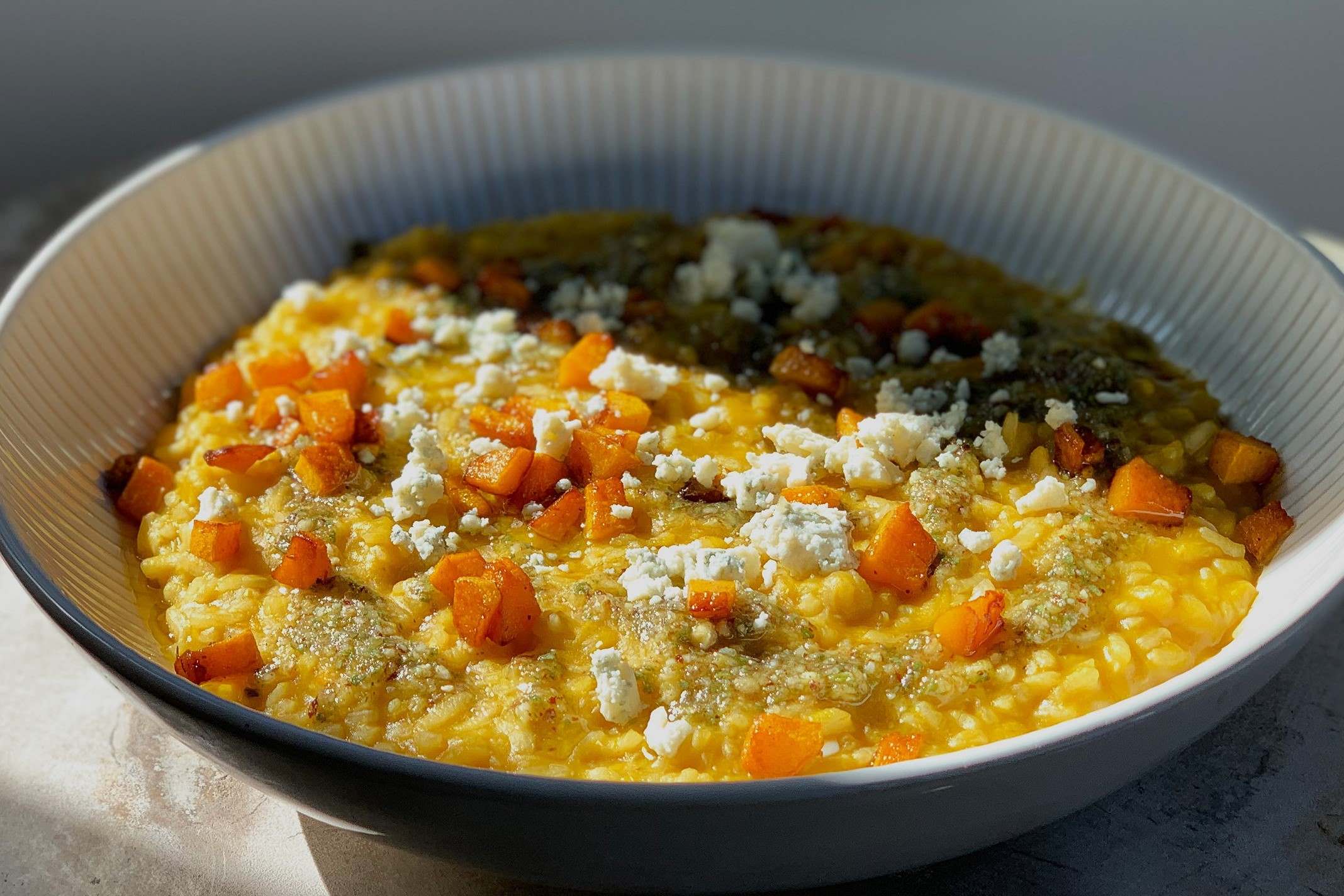
Ingredients For Kabocha Squash Risotto Recipe
Arborio rice: A special type of rice that gets creamy when cooked, perfect for risotto.
Kabocha squash: A sweet, orange-fleshed squash that adds flavor and color.
Onion: Adds a mild, savory base to the dish.
Garlic: Gives a little extra flavor and aroma.
Vegetable broth: The liquid used to cook the rice and add flavor.
Parmesan cheese: Adds creaminess and a salty, cheesy taste.
Olive oil: Used for cooking the onion and garlic, adds richness.
Salt and pepper: To season the dish and bring out all the flavors.
Technique Tip for This Recipe
One of the most important steps in making this Kabocha Squash Risotto is adding the vegetable broth slowly, one ladle at a time, while stirring constantly. Here’s how to do it so your risotto turns out creamy and delicious:
- Start by pouring in just enough broth to cover the bottom of the pan. Stir gently but steadily so the arborio rice can soak up the liquid.
- Wait until the rice has absorbed almost all the broth before adding the next ladle. This usually takes a couple of minutes.
- Keep repeating this process—add a little broth, stir, wait for it to absorb—until the rice is soft but still has a tiny bit of bite in the center. This usually takes about 20 minutes.
- Stir often to keep the rice from sticking to the pan and to help release its natural starches, which makes the risotto creamy.
Doing it this way might seem slow, but it’s what makes the texture so special. If you pour in all the broth at once, the risotto can turn out mushy or watery instead of smooth and rich. Plus, stirring helps the flavors mix together better.
When I first tried this, I got impatient and dumped in all the broth at once. The risotto was okay, but it wasn’t nearly as creamy as I wanted. Now, I enjoy the process—it’s kind of relaxing to stir and watch the rice slowly soak up the broth. Also, if you’re in a hurry, you can keep warm broth on the stove so it doesn’t cool down the rice when you add it. That little trick helps everything cook evenly.
Give it a try—you’ll notice the difference in every bite!
Suggested Side Dishes
Alternative Ingredients
arborio rice - Substitute with carnaroli rice: Carnaroli rice has a similar creamy texture and is often used in risotto.
kabocha squash - Substitute with butternut squash: Butternut squash has a similar sweetness and texture, making it a good alternative.
onion - Substitute with shallots: Shallots provide a milder and slightly sweeter flavor, which can complement the dish well.
garlic - Substitute with garlic powder: If fresh garlic is unavailable, garlic powder can provide a similar flavor, though it is less pungent.
vegetable broth - Substitute with chicken broth: Chicken broth can add a rich flavor, though it will make the dish non-vegetarian.
parmesan cheese - Substitute with pecorino romano: Pecorino Romano has a similar salty and nutty flavor, though it is slightly sharper.
olive oil - Substitute with canola oil: Canola oil has a neutral flavor and similar cooking properties, making it a good alternative.
salt - Substitute with soy sauce: Soy sauce can add a similar level of saltiness along with a depth of umami flavor.
pepper - Substitute with white pepper: White pepper has a milder flavor and can be used to maintain the dish's color and taste.
Other Alternative Recipes Similar to This Dish
How to Store or Freeze This Dish
Allow the kabocha squash risotto to cool to room temperature before storing. This prevents condensation, which can make the dish soggy.
Transfer the cooled risotto into airtight containers. For portion control, consider using smaller containers or even freezer bags.
If using freezer bags, lay them flat in the freezer to save space and ensure even freezing. Label each bag with the date and contents for easy identification.
Store the risotto in the refrigerator for up to 3 days. For longer storage, place it in the freezer, where it can last up to 3 months.
When ready to reheat, if frozen, thaw the risotto in the refrigerator overnight. This gradual thawing helps maintain the texture and flavor of the arborio rice and kabocha squash.
Reheat the risotto on the stovetop over medium heat. Add a splash of vegetable broth or water to help restore its creamy consistency. Stir frequently to prevent sticking.
Alternatively, you can reheat the risotto in the microwave. Place it in a microwave-safe dish, cover with a microwave-safe lid or plastic wrap, and heat in 1-minute intervals, stirring in between, until heated through.
If the risotto seems too thick after reheating, add a bit more vegetable broth or water to achieve the desired consistency. Adjust the seasoning with salt and pepper if needed.
For an extra touch, consider adding freshly grated parmesan cheese or a drizzle of olive oil just before serving to enhance the flavor and texture.
How to Reheat Leftovers
Stovetop Method: Place the leftover kabocha squash risotto in a saucepan. Add a splash of vegetable broth or water to help loosen it up. Heat over medium-low heat, stirring occasionally, until warmed through. This method helps maintain the creamy texture of the risotto.
Microwave Method: Transfer the risotto to a microwave-safe dish. Add a small amount of vegetable broth or water and cover the dish with a microwave-safe lid or plastic wrap. Heat on medium power for 2-3 minutes, stirring halfway through, until the risotto is hot. Be careful not to overheat, as this can make the risotto dry.
Oven Method: Preheat your oven to 350°F (175°C). Place the risotto in an oven-safe dish and add a bit of vegetable broth or water to keep it moist. Cover the dish with aluminum foil and bake for about 15-20 minutes, or until heated through. This method is great for reheating larger portions.
Double Boiler Method: Fill a pot with a couple of inches of water and bring it to a simmer. Place a heatproof bowl with the risotto over the pot, ensuring the bottom of the bowl does not touch the water. Stir occasionally until the risotto is heated through. This gentle method helps prevent the risotto from drying out.
Sous Vide Method: Place the leftover risotto in a vacuum-sealed bag or a ziplock bag with the air removed. Submerge the bag in a water bath set to 165°F (74°C) and heat for about 20-30 minutes. This method ensures even reheating without compromising the texture.
Best Tools for Making This Recipe
Large saucepan: A deep pan used for cooking the risotto, allowing for even heat distribution and enough space to stir the ingredients.
Wooden spoon: Ideal for stirring the risotto, as it won't damage the non-stick surface of the saucepan and provides good control.
Ladle: Used to gradually add the vegetable broth to the rice, ensuring the liquid is absorbed properly.
Chef's knife: Essential for finely chopping the onion and cubing the kabocha squash.
Cutting board: Provides a safe and stable surface for chopping the vegetables.
Garlic press: Handy for mincing the garlic quickly and efficiently.
Measuring cups: Used to measure the exact amount of arborio rice and vegetable broth needed for the recipe.
Grater: Necessary for grating the parmesan cheese to be stirred into the risotto.
Mixing bowl: Useful for holding the cubed kabocha squash and other prepped ingredients before cooking.
Serving spoon: Perfect for serving the finished risotto onto plates or into bowls.
How to Save Time on This Recipe
Pre-cut ingredients: Prepare the kabocha squash, onion, and garlic in advance to save time during cooking.
Use pre-made broth: Opt for store-bought vegetable broth to skip the step of making it from scratch.
Grate cheese ahead: Grate the parmesan cheese before starting the recipe to streamline the process.
Batch cook: Double the recipe and freeze half for a quick meal later.
Microwave squash: Soften the kabocha squash in the microwave for a few minutes to reduce cooking time.
Kabocha Squash Risotto
Ingredients
Main Ingredients
- 1 cup Arborio rice
- 2 cups Kabocha squash, peeled and cubed
- 1 small Onion, finely chopped
- 2 cloves Garlic, minced
- 4 cups Vegetable broth
- ½ cup Parmesan cheese, grated
- 2 tablespoons Olive oil
- to taste Salt and pepper
Instructions
- Heat the olive oil in a large saucepan over medium heat. Add the onion and garlic, and cook until softened.
- Add the kabocha squash and cook for a few minutes until it starts to soften.
- Stir in the Arborio rice and cook for a minute until it is well coated with oil.
- Gradually add the vegetable broth, one ladle at a time, stirring constantly and allowing the liquid to be absorbed before adding more.
- Continue this process until the rice is creamy and cooked through, about 20 minutes.
- Stir in the grated Parmesan cheese and season with salt and pepper to taste.
- Serve hot and enjoy!
Nutritional Value
Keywords
Suggested Appetizers and Desserts for This Recipe
More Amazing Recipes to Try 🙂
- Baked Jalapeno Poppers Recipe35 Minutes
- Cranberry Pineapple Juice Recipe10 Minutes
- Carrot and Orange Juice Recipe10 Minutes
- Aebleskiver Recipe35 Minutes
- Vegan Coconut Curry with Pasta and Vegetables Recipe40 Minutes
- Buffalo Chicken Pasta Salad Recipe35 Minutes
- Jibarito Recipe50 Minutes
- Watermelon Cooler Slushy Recipe10 Minutes









Leave a Reply