
Tabbouleh is one of those fresh and bright dishes that always makes me feel like summer is here. I love how the flavors of herbs and lemon come together in a simple way that’s both tasty and healthy. I think you’ll enjoy how easy it is to make and how perfect it is for sharing with friends or family.
Some ingredients in this recipe might be new if you haven’t cooked Middle Eastern food before. Bulgur wheat is a type of cracked wheat that you can usually find in the rice or grain aisle at the supermarket. Fresh parsley and mint are key to getting the right flavor, so try to pick the freshest bunches you can find. If you don’t see mint, sometimes the frozen section has it, but fresh is best for this salad.
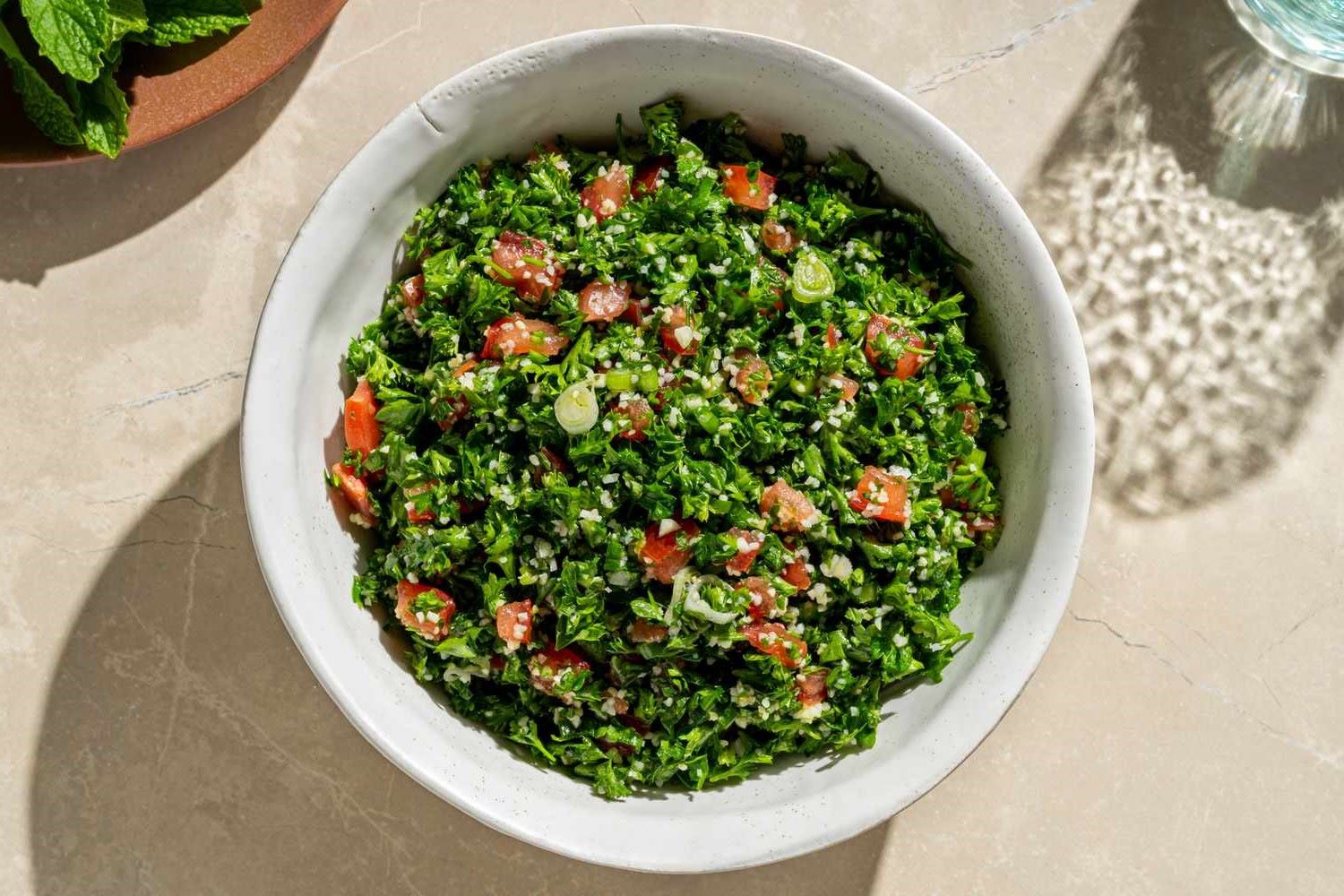
Ingredients For Tabbouleh Recipe
BULGUR WHEAT: A type of cracked wheat that soaks up flavors well and adds a chewy texture.
PARSLEY: Fresh parsley gives the salad its bright, green flavor and is the main herb in tabbouleh.
MINT: Adds a cool, refreshing taste that balances the lemon and olive oil.
TOMATOES: Diced tomatoes add juiciness and a little sweetness.
CUCUMBER: Adds crunch and a mild, fresh flavor.
RED ONION: Gives a bit of sharpness and color to the salad.
OLIVE OIL: Brings everything together with a smooth, rich taste.
LEMON JUICE: Adds tanginess and brightens all the flavors.
Technique Tip for This Recipe
One of the most important steps in this Tabbouleh Recipe is soaking the bulgur wheat in boiling water. Here’s how to do it so your bulgur turns out just right:
- Put the bulgur wheat in a bowl that can handle heat.
- Pour the boiling water over the bulgur—make sure the water covers it completely.
- Cover the bowl with a lid or plate to trap the steam.
- Let it sit quietly for about 15 minutes. This gives the bulgur time to soak up the water and soften.
- After 15 minutes, use a fork to fluff the bulgur gently. This helps separate the grains so they don’t clump together.
- Let it cool before mixing it with the other ingredients.
Doing this soaking step right makes your tabbouleh light and fluffy instead of mushy or hard. If you skip fluffing, the bulgur can get sticky and clump up, which isn’t as nice to eat. Also, letting it cool means the fresh herbs and veggies won’t wilt when you add the warm bulgur.
I remember the first time I made tabbouleh, I didn’t fluff the bulgur well and ended up with a big sticky lump. It wasn’t terrible, but it wasn’t the fresh, bright salad I wanted. Now, fluffing with a fork is my favorite little trick—it’s quick and makes a big difference. Plus, it’s kind of fun to see the grains separate and get fluffy!
Suggested Side Dishes
Alternative Ingredients
bulgur wheat - Substitute with quinoa: Quinoa has a similar texture and is gluten-free, making it a great alternative for those with gluten sensitivities.
boiling water - Substitute with vegetable broth: Using vegetable broth instead of water can add extra flavor to the dish.
parsley - Substitute with cilantro: Cilantro offers a fresh and slightly citrusy flavor, providing a different but complementary taste.
mint - Substitute with basil: Basil has a sweet and slightly peppery flavor that can add a unique twist to the dish.
diced tomatoes - Substitute with cherry tomatoes: Cherry tomatoes are sweeter and can add a burst of flavor and color.
diced cucumber - Substitute with zucchini: Zucchini has a similar texture and can be used raw, adding a mild flavor to the salad.
diced red onion - Substitute with green onions: Green onions have a milder taste and can add a fresh, crisp flavor.
olive oil - Substitute with avocado oil: Avocado oil has a similar healthy fat profile and a neutral taste, making it a good alternative.
lemon juice - Substitute with lime juice: Lime juice has a similar acidity and can provide a slightly different but refreshing citrus flavor.
Other Alternative Recipes
How to Store or Freeze This Dish
- To store your tabbouleh, transfer it to an airtight container. This will help maintain its freshness and prevent any unwanted odors from seeping in.
- Place the container in the refrigerator. Tabbouleh can be stored in the fridge for up to 3 days, retaining its vibrant flavors and textures.
- If you plan to keep it longer, consider freezing. Portion the tabbouleh into smaller, freezer-safe containers or resealable plastic bags. This makes it easier to thaw only what you need.
- Before sealing, press out as much air as possible from the bags to prevent freezer burn, which can affect the taste and texture of the tabbouleh.
- Label each container or bag with the date of freezing. This helps you keep track of how long it has been stored.
- When ready to enjoy, thaw the tabbouleh in the refrigerator overnight. This slow thawing process helps maintain the integrity of the vegetables and bulgur wheat.
- Once thawed, give the tabbouleh a good stir to redistribute any olive oil and lemon juice that may have settled.
- If the tabbouleh seems a bit dry after thawing, refresh it with a splash of lemon juice and a drizzle of olive oil to revive its bright, zesty flavor.
- Always taste before serving. Adjust the seasoning with a pinch of salt or a sprinkle of fresh parsley if needed to bring back its original zest.
How to Reheat Leftovers
Use a microwave-safe dish: Place the leftover tabbouleh in a microwave-safe dish. Cover it with a microwave-safe lid or a damp paper towel to retain moisture. Heat on medium power for 1-2 minutes, stirring halfway through to ensure even heating.
Stovetop method: Heat a non-stick skillet over medium-low heat. Add a small amount of olive oil to the skillet. Add the tabbouleh and stir frequently until warmed through, about 3-5 minutes. This method helps maintain the texture of the bulgur wheat and vegetables.
Oven method: Preheat your oven to 300°F (150°C). Spread the tabbouleh evenly on a baking sheet. Cover with aluminum foil to prevent drying out. Heat for about 10-15 minutes, or until warmed through. This method is ideal for reheating larger quantities.
Room temperature: If you prefer not to heat the tabbouleh, you can let it sit at room temperature for about 30 minutes. This allows the flavors to meld together without altering the texture of the parsley, mint, and other fresh ingredients.
Add fresh ingredients: To refresh the tabbouleh, consider adding a bit more lemon juice and olive oil before serving. You can also mix in some freshly chopped parsley or mint to enhance the flavors.
Best Tools for This Recipe
Bowl: Use a large bowl to combine the parsley, mint, tomatoes, cucumber, and red onion.
Small bowl: A small bowl is needed to soak the bulgur wheat with boiling water.
Fork: A fork is essential for fluffing the bulgur wheat after it has soaked.
Knife: A sharp knife is necessary for finely chopping the parsley, mint, tomatoes, cucumber, and red onion.
Cutting board: A cutting board provides a safe surface for chopping all the vegetables and herbs.
Measuring cups: Measuring cups are used to measure out the bulgur wheat, olive oil, and lemon juice accurately.
Measuring spoons: Measuring spoons help in measuring smaller quantities of ingredients like salt and pepper.
Mixing spoon: A mixing spoon is useful for tossing all the ingredients together until well combined.
Lid or plate: A lid or plate is needed to cover the bowl of bulgur wheat while it soaks.
How to Save Time on This Recipe
Pre-chop ingredients: Finely chop parsley, mint, tomatoes, cucumber, and red onion in advance and store them in airtight containers.
Quick-cook bulgur: Use boiling water to soak the bulgur wheat and cover it to speed up the process.
Use a food processor: A food processor can quickly chop herbs and vegetables, saving you time.
Batch prep: Prepare larger quantities of bulgur wheat and vegetables to use in multiple meals throughout the week.
Efficient mixing: Combine all ingredients in a large bowl to ensure even distribution and save time on mixing.
Tabbouleh Recipe
Ingredients
Main Ingredients
- 1 cup bulgur wheat
- 1 ½ cups boiling water
- 1 cup finely chopped parsley
- ½ cup finely chopped mint
- ½ cup diced tomatoes
- ¼ cup diced cucumber
- ¼ cup diced red onion
- ¼ cup olive oil
- ¼ cup lemon juice
- Salt and pepper to taste
Instructions
- Place bulgur wheat in a bowl, pour boiling water over it, cover, and let it sit for 15 minutes.
- Fluff the bulgur with a fork and let it cool.
- In a large bowl, combine parsley, mint, tomatoes, cucumber, and red onion.
- Add the cooled bulgur to the bowl.
- Drizzle olive oil and lemon juice over the mixture, and season with salt and pepper.
- Toss everything together until well combined.
Nutritional Value
Keywords
More Amazing Recipes to Try 🙂
- Pickled Watermelon Rinds Recipe30 Minutes
- Cocktail Sauce Recipe5 Minutes
- Mexican Sopes Recipe40 Minutes
- Traditional Mexican Street Tacos Recipe30 Minutes
- Eggless French Toast Recipe20 Minutes
- Traditional Gyro Meat Recipe1 Hours 20 Minutes
- Sea Scallops and Angel Hair Pasta Recipe30 Minutes
- Swedish Glogg Recipe40 Minutes




Leave a Reply